

A toe that’s stiffer than it used to be gets blamed on all sorts of things first. Worn-out shoes. Standing too long at work. Just getting older, the explanation that covers almost anything once someone’s past forty. Arthritis is rarely the first guess, even though it’s one of the more common reasons a big toe stops moving the way it used to.
That stiffness, plus pain pushing off while walking, is often the early version of big toe arthritis. Most people miss it for months. Sometimes years. It just doesn’t feel dramatic enough to bring up to anyone, let alone a doctor.
Why It Gets Written Off as Normal Wear
That joint at the base of the big toe works harder than people realise, bending with every single step taken. So when it starts costing more effort, or there’s a dull ache that wasn’t there before, most people adapt instead of asking why. Weight shifts slightly onto the other foot. Shoes with stiffer soles get bought. None of it actually fixes anything. It’s just quiet compensation for a joint that’s already losing ground.
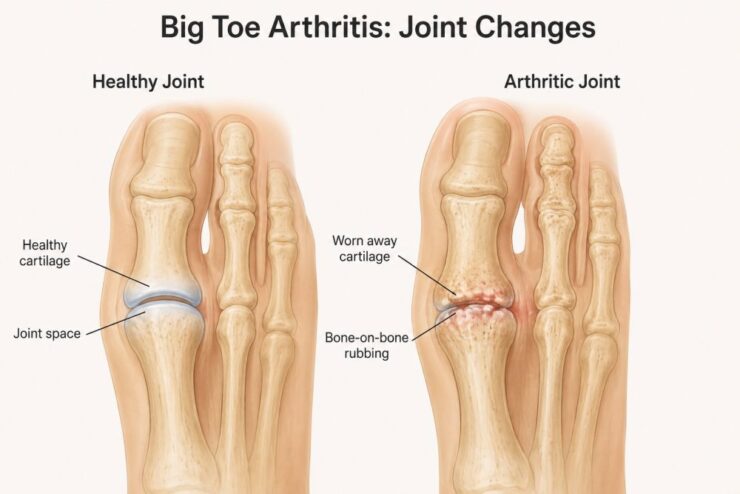
What Actually Happens Inside the Joint
Cartilage is the reason that joint glides the way it should, and arthritis slowly wears it thinner. Once there’s not enough left, bone starts meeting bone directly. That’s where the stiffness comes from. The sharp, catching pain too.
A few signs that tend to get dismissed as unrelated:
- Pain that’s worse pushing off while walking than just standing still
- Swelling around the base of the big toe that comes and goes
- A grinding or catching sensation when the toe bends
- Difficulty wearing shoes with any kind of heel, even a small one
- The toe gradually looking slightly larger or more knobbly than it used to
Why Catching It Early Actually Matters
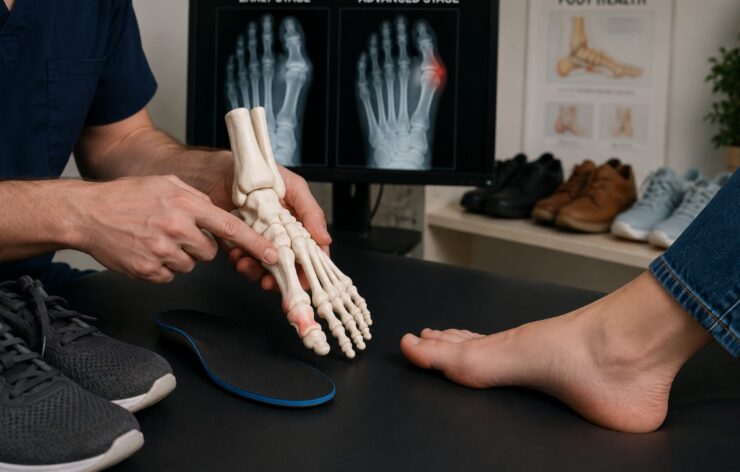
Arthritis in this joint doesn’t reverse itself, but the rate it progresses at isn’t fixed either.It’s actually the most common arthritic foot condition there is, which says a lot about why it gets dismissed as ordinary wear instead of something worth checking properly. Catch it early, though, and there’s real ground to be gained. Stiffer-soled shoes, orthotics, anti-inflammatory management, none of it undoes the damage, but it slows things down enough to keep the joint working for years longer than it would otherwise.
Treatment Isn’t Just “Wait and See”
There’s a common assumption that arthritis just has to be lived with once it starts. That’s true for some joints in some circumstances, but the big toe has treatment options that go well beyond painkillers. Orthotic inserts change how weight moves through the joint during walking. Targeted footwear reduces the amount of bending the toe actually has to do. In more advanced cases, joint-preserving or joint-replacing surgical options exist that can restore a meaningful amount of function.
Worth Getting Checked, Not Just Worked Around
A toe that’s stiffer, sorer, or harder to push off with than it used to be isn’t automatically something to just work around indefinitely. Most people who eventually get it looked at wish they’d done it years earlier, mostly because the joint had more room to be helped before it stiffened as much as it did.